Bespoke Software Development Company in the UK

Vrinsoft helps UK businesses develop software to support complex operations, connect business systems, and meet specific technical requirements. Our software developers work across bespoke software, enterprise applications, AI integration, cloud solutions, and modernisation to support the requirements of SMEs and large enterprises.

IP:216.73.217.10

We’d ❤️ to Hear from You

  • clutch-reviews
  • google_reviews
zara
bella
lcore
money
appyway
open-univercities
marriott
lego
kuwait-airways
elysian-energy

Software Development Services

Our software development services support businesses that need to build new software, improve existing systems, connect different platforms, or introduce modern technologies such as AI and cloud.

icn_consulting

Software Consulting Services

Make informed technology decisions with software consulting services tailored to your business requirements. Vrinsoft helps UK businesses assess existing systems, define software requirements, review technical architecture, and plan new development or modernisation projects.

icn_custom-software

Custom Software Development

Build software around specific business processes with custom software development services. Vrinsoft develops internal business applications, customer platforms, portals, workflow systems, and other bespoke applications based on your operational requirements.

icn_enterprise-software

Enterprise Software Development

Support complex business operations with enterprise software development for larger organisations with multiple users, systems, teams, and operational requirements. Vrinsoft develops enterprise applications that can connect with existing technology and support business-critical processes.

icn_Software-Product-Development

Software Product Development

Develop commercial software products and digital platforms with software product development services. Vrinsoft works with businesses that need to take a software product from technical planning through development, testing, launch, and ongoing improvements.

icn_AI-Software-Development

AI Software Development

Introduce practical AI capabilities into new or existing applications with AI software development services. Vrinsoft develops AI-powered applications using technologies such as generative AI, machine learning, intelligent automation, AI assistants, predictive analytics, and natural language processing.

icn_software-modernization

Software Modernisation & Integration

Improve ageing applications and connect disconnected systems with software modernisation and integration services. Vrinsoft helps UK businesses review legacy applications, address technical debt, modernise application architecture, and connect existing platforms through APIs and system integration.

Build Software That Supports Your Business

Modernise, connect, or develop software around your business requirements, technology, and future plans. Talk to our software development team about your project.

Contact Us

Software Development Process

From requirements gathering and technical planning to development, testing, sign-off, and ongoing support, our software development process provides a structured approach to delivering software around your business and technical requirements.

View More

Technology Stack for Modern Software Projects

We select technologies based on your software requirements, architecture, integration needs, security considerations, performance expectations, and long-term maintenance requirements. Our software development team works across modern technologies to deliver applications and platforms for UK businesses.

Android

Flutter

Swift

iOS

React Native

.NET

Drupal

HTML 5

Java

Joomla

PHP

AWS

Azure

Google Cloud

Add AI Capabilities to Modern Software

AI can become part of enterprise software, business applications, data platforms, and operational systems. Vrinsoft combines AI software development with application engineering, data integration, automation, and cloud technologies to deliver software for evolving UK business requirements.

Discuss Your Software Requirements

Why Partner with Vrinsoft for Software Development

Vrinsoft provides software development services for established UK businesses managing new technology projects, existing systems, and changing operational requirements. From software consulting and bespoke development to AI, modernisation, and integration, we help teams make practical technology decisions and deliver software that fits their business.

  1. Business-Led Software Planning

    Projects start with your business requirements, not a predefined technology stack. Our software consulting services help stakeholders assess requirements, existing systems, technical constraints, priorities, and delivery options before development begins.

  2. Works With Your Existing Systems

    New software often needs to work alongside the technology your business already uses. Our custom software development services connect applications with CRM, ERP, finance, databases, APIs, and other business systems without treating your existing technology as something that must simply be replaced.

  3. Modern Technology Expertise

    Established businesses need technology that can support current requirements and future projects. Our teams work with AI software development, cloud technologies, automation, APIs, data platforms, and modern application architectures to introduce new capabilities where they have a clear business purpose.

  4. Structured for Complex Projects

    Larger software projects involve multiple stakeholders, technical dependencies, governance requirements, and defined delivery milestones. Our enterprise software development approach covers architecture, development, testing, UAT, deployment, sign-off, and ongoing development with clear responsibilities throughout the project.

  5. Modernise Before You Replace

    Replacing an existing system may not always be the most practical option. Our software modernisation services assess legacy applications, technical debt, outdated technologies, and system dependencies before recommending whether to modernise, migrate, integrate, or replace existing software.

  6. Practical AI Adoption

    AI should address a defined business requirement rather than become another technology project without a clear purpose. Our AI software development services can introduce generative AI, intelligent automation, AI assistants, predictive capabilities, and data-driven functionality into new or existing business applications.

  7. Flexible Commercial Models

    Software projects vary in scope, procurement requirements, and delivery arrangements. We offer dedicated teams, fixed-price projects, and time and materials models based on requirements, resource needs, project scope, and delivery priorities.

  8. Support Beyond Go-Live

    Software requires ongoing attention after go-live. Our software maintenance and support covers technical issues, updates, performance improvements, security work, integrations, new features, and further development for applications developed by Vrinsoft or another supplier.

Software Solutions for UK Industries

Businesses across different sectors have their own operational processes, technology estates, data requirements, and compliance considerations. Vrinsoft provides software development services for UK businesses that need bespoke applications, enterprise platforms, system integration, automation, and modern technology aligned with their sector.

Banks, insurers, investment firms, and financial businesses rely on software for customer services, financial operations, payments, reporting, and data management. Our financial software development services support secure applications that integrate with existing financial platforms, APIs, databases, and business systems.

Clinical teams, laboratories, and healthcare businesses depend on connected software to manage records, workflows, operations, and data. Vrinsoft develops healthcare software solutions that support administrative processes, clinical applications, data platforms, and integration with existing systems.

Production environments often involve multiple systems for managing manufacturing processes, inventory, quality, assets, suppliers, and operational data. Our manufacturing software development services connect business applications with ERP systems, IoT platforms, analytics, and other operational technology.

Complex supply chains require software that connects orders, warehouses, transport operations, inventory, vehicles, and delivery information. Vrinsoft provides logistics software development services for platforms that integrate operational workflows, tracking data, fleet systems, warehouse technology, and business applications.

Professional firms need software that supports client management, internal workflows, documents, reporting, collaboration, and day-to-day operations. Our business software development services help established firms connect internal systems, automate routine processes, and provide secure digital services for clients and staff.

Technology Built for Industry-Specific Requirements

Every industry has different systems, processes, data, and operational priorities. Vrinsoft delivers custom software development, AI, integration, modernisation, and data solutions for UK businesses with complex industry requirements.

Discuss Your Software Requirements

Software Engineering Standards

Our engineering practices focus on the technical quality, security, reliability, and maintainability of the software we deliver. Each project considers its architecture, development standards, testing requirements, compliance needs, integrations, performance expectations, and production environment.

Architecture-Technical-Standards

Architecture & Technical Standards

Software architecture is planned around application requirements, integrations, data structures, scalability, security, and long-term maintenance. Technical decisions consider the existing technology environment and the requirements of the software rather than applying the same architecture to every project.

Icon-Agile-Development

Agile Software Development

Agile practices support regular development, technical reviews, stakeholder feedback, and controlled changes throughout the project. Development is organised into manageable releases, allowing requirements and priorities to be reviewed as the software progresses.

Automated-Testing

Quality Assurance & Automated Testing

QA is integrated throughout development rather than left until the final release. Functional, integration, API, performance, security, compatibility, and regression testing help identify issues early and validate software against agreed requirements and acceptance criteria.

Security-Compliance-Data-Protection

Security, Compliance & Data Protection

Security requirements are considered across application architecture, authentication, authorisation, APIs, data handling, dependencies, and third-party integrations. Where applicable, projects can account for requirements such as UK GDPR, data protection, information security, and industry-specific compliance obligations.

Topical Guide for Software Development Services in UK

Enterprise AI Software Development Use Cases for Business Process Automation

AI-powered business software helps established companies reduce repetitive work, improve access to information, and make better operational decisions. With the right software development services, UK businesses can integrate AI into existing applications or develop custom solutions for specific operational requirements.

1. Automating Document Processing

Finance, procurement, and operations teams process invoices, contracts, purchase orders, and forms daily. Custom software development can connect AI document processing with business applications to extract information, identify discrepancies, and reduce manual administration.

  • Extract invoice details and supplier information.
  • Match purchase orders with invoices.
  • Identify missing data and discrepancies.
  • Classify contracts and business documents.
  • Route exceptions to staff for approval.

2. Accessing Internal Business Knowledge

Employees often spend time searching policies, contracts, technical documents, and internal records. Enterprise software development can integrate generative AI and retrieval-augmented generation (RAG) to help teams find reliable answers from approved company information.

  • Search company documents using natural language.
  • Summarise lengthy reports and policies.
  • Retrieve information from approved knowledge bases.
  • Provide answers with relevant source references.
  • Restrict access to authorised business information.

3. Automating Multi-Step Workflows

Procurement approvals, customer requests, and employee onboarding often involve several applications and approval stages. AI software development can introduce AI agents that gather information, classify requests, and prepare actions while existing workflow rules retain control over important decisions.

  • Classify incoming requests automatically.
  • Route tasks to relevant departments.
  • Prepare procurement and approval requests.
  • Retrieve records from connected applications.
  • Escalate complex cases for human review.

4. Improving Forecasting and Planning

Historical sales, inventory, financial records, and equipment data can reveal patterns that are difficult to identify manually. Business software development can incorporate predictive analytics to help teams forecast demand, identify unusual activity, and make better-informed operational plans.

  • Forecast demand and inventory requirements.
  • Identify unusual patterns in business data.
  • Predict potential stock shortages.
  • Analyse historical sales and financial trends.
  • Support maintenance and resource planning.

5. Improving Customer and Employee Support

Customer service and internal support teams handle recurring questions, account enquiries, and service requests. Bespoke software development services can integrate AI assistants into customer portals and internal applications, helping staff retrieve information and resolve routine requests faster.

  • Answer routine questions using approved information.
  • Summarise previous customer interactions.
  • Retrieve relevant account and service details.
  • Categorise and route support requests.
  • Escalate sensitive enquiries to staff.

6. Connecting AI With Existing Software

AI becomes more useful when connected to established ERP, CRM, finance, and reporting systems. A software development company in the UK can integrate AI capabilities with existing applications through APIs, enabling authorised data exchange and automated workflows without replacing every system.

  • Connect enterprise applications through APIs.
  • Exchange authorised data between systems.
  • Integrate AI with ERP and CRM platforms.
  • Maintain access controls and audit records.
  • Monitor automation accuracy and performance.

Vrinsoft helps UK businesses integrate AI into business applications, automate workflows, and connect enterprise systems through tailored software development. Contact our team to discuss suitable use cases.

Bespoke Software vs Off-the-Shelf Software for Established Businesses

Established businesses must choose software that fits their operational requirements, existing systems, budget, and long-term plans. Understanding the differences between bespoke and ready-made solutions helps decision-makers assess which approach offers the right balance of functionality, flexibility, and ongoing costs.

1. Understanding the Difference Between Bespoke and Off-the-Shelf Software

Off-the-shelf software provides pre-built features for common business needs, while bespoke software is developed to meet specific operational requirements. The right choice depends on how closely existing products match business processes and whether additional functionality justifies custom development.

  • Off-the-shelf products offer ready-made features and established pricing.
  • Bespoke applications support specific workflows and requirements.
  • Customisation options vary between commercial software products.
  • Bespoke solutions can support specialised operational processes.
  • Total costs depend on implementation, licensing, maintenance, and future changes.

A custom software development company can assess these factors before recommending an appropriate approach.

2. When Off-the-Shelf Software Makes Sense

Ready-made software can suit businesses with standard requirements, limited implementation time, or predictable workflows. Many products also include regular updates, vendor support, and integrations with widely used business applications, reducing the need for extensive development.

  • Deploy established features without building an application from scratch.
  • Use subscription or licensing models where commercially suitable.
  • Access vendor-managed updates and product support.
  • Integrate with common accounting, CRM, and productivity tools.
  • Evaluate limitations around customisation, data access, and licensing.

A software development agency in the UK can help evaluate product suitability and identify integration requirements before implementation.

3. When Bespoke Software Is the Better Option

Businesses with specialised workflows, complex approval structures, or distinct service models may find that standard products cannot meet every requirement. Bespoke software development services allow functionality, integrations, and user permissions to be planned according to operational needs.

  • Support specialised business processes.
  • Connect systems that lack suitable native integrations.
  • Control feature priorities and development roadmaps.
  • Tailor user permissions and reporting requirements.
  • Extend functionality as business needs change.

4. Comparing Long-Term Costs

The initial price alone rarely provides a complete comparison. Licensing, implementation, integrations, staff training, support, infrastructure, and future changes can significantly affect the total cost of ownership for both approaches.

  • Compare setup fees with ongoing subscription costs.
  • Include migration, integration, and training expenses.
  • Account for support, upgrades, and maintenance.
  • Assess the cost of workarounds and manual processes.
  • Estimate future development and scaling requirements.

A custom software development company in the UK can help prepare a cost comparison based on project scope and business priorities.

5. Considering Integration, Security, and Control

Software decisions affect how business data moves between departments and systems. Companies should assess access controls, reporting requirements, data handling, vendor dependencies, and compatibility with their existing technology before committing to a solution.

  • Review available APIs and integration options.
  • Assess data access and security controls.
  • Check vendor contracts and exit arrangements.
  • Consider regulatory and industry requirements.
  • Confirm ownership and maintenance responsibilities.

For businesses in London and across the UK, these checks can help align software investment with operational and procurement requirements.

6. Choosing the Right Development Partner

When bespoke development is appropriate, selecting a suitable supplier requires more than comparing quotations. Businesses should assess technical experience, discovery methods, project governance, testing practices, delivery milestones, and post-launch support.

  • Review relevant project experience and case studies.
  • Confirm requirements gathering and scope definition.
  • Assess testing, documentation, and quality assurance.
  • Agree milestones, acceptance criteria, and responsibilities.
  • Clarify support arrangements after go-live.

Vrinsoft provides custom software development services for UK businesses evaluating bespoke applications, system integration, and software modernisation. Contact our team to discuss your requirements and compare suitable options.

Legacy Software Modernisation Strategies for Large Businesses

Older business applications can become harder to maintain as technology changes, integrations grow, and operational requirements increase. For established UK enterprises, software modernisation services can improve maintainability, support new capabilities, and reduce reliance on outdated technology without replacing every application at once.

1. Assessing Existing Software and Technical Risks

Before choosing a modernisation approach, businesses need a clear view of application performance, dependencies, support limitations, and operational risks. This assessment helps prioritise systems that require immediate attention while identifying applications that can continue operating with targeted improvements.

  • Review application architecture and dependencies.
  • Identify unsupported technologies and security risks.
  • Assess maintenance costs and recurring incidents.
  • Document integrations and data dependencies.
  • Prioritise applications by business impact.

A software development company in the UK can assess existing applications and recommend suitable modernisation priorities.

2. Refactoring Applications to Improve Maintainability

Refactoring improves the internal structure of existing software without necessarily changing its core functionality. It can reduce technical debt, simplify future updates, and make business-critical applications easier to maintain. AI-assisted analysis can also help teams understand older codebases before making changes.

  • Simplify complex code and application components.
  • Remove duplicated logic where appropriate.
  • Use AI-assisted code analysis to document legacy applications.
  • Identify potential refactoring opportunities and dependencies.
  • Improve automated test coverage.

3. Replatforming Applications and Moving to the Cloud

Some applications benefit from updated hosting environments without requiring a complete redesign. Replatforming can improve infrastructure management, deployment options, and access to managed cloud services, depending on application requirements and existing technical constraints.

  • Assess cloud compatibility and migration risks.
  • Select suitable infrastructure and managed services.
  • Plan data migration and application testing.
  • Validate performance before production deployment.
  • Prepare rollback and business continuity plans.

An experienced software development agency in the UK can plan application migration around technical requirements and operational priorities.

4. Replacing Outdated Components Gradually

Replacing an entire legacy system at once can introduce substantial cost and disruption. A phased modernisation strategy allows businesses to replace selected components while keeping essential services operational and validating each stage before proceeding.

  • Prioritise components with high maintenance costs.
  • Replace functions through manageable releases.
  • Preserve essential integrations during transition.
  • Validate data consistency between systems.
  • Monitor performance after each release.

5. Integrating Legacy Systems With Modern Applications

Older systems may still contain valuable business data and support essential operations. API development and system integration can connect these applications with newer platforms, reduce duplicate data entry, and improve information flow between departments.

  • Connect applications through suitable APIs.
  • Synchronise authorised data across systems.
  • Integrate ERP, CRM, and reporting platforms.
  • Apply access controls and audit logging.
  • Monitor failed transactions and integration issues.

6. Planning Governance, Testing, and Ongoing Support

Modernisation requires clear ownership, technical oversight, and testing throughout delivery. Businesses should define acceptance criteria, assess operational risks, and prepare support teams before changes reach production.

  • Agree project scope, milestones, and responsibilities.
  • Test functionality, security, and performance.
  • Conduct user acceptance testing before go-live.
  • Prepare documentation and staff training.
  • Monitor systems and plan future improvements.

Vrinsoft provides software modernisation services for UK businesses seeking to update legacy applications, improve integrations, and plan phased technology changes. Contact our team to discuss your existing systems and modernisation priorities.

Enterprise Software Integration Strategies for Connected Business Systems

Businesses often rely on separate applications for finance, sales, inventory, customer management, and daily operations. Software integration services connect these systems, reduce duplicate data entry, and help teams access consistent information across departments. For UK enterprises, effective integration can improve reporting, workflow coordination, and control over business data.

1. Integrating ERP and CRM Systems

ERP and CRM platforms manage different parts of business operations, from financial records and inventory to customer relationships and sales pipelines. Connecting these systems helps teams share information and reduces the need for manual transfers between applications.

  • Synchronise customer records, orders, and account details.
  • Connect Salesforce and Microsoft Dynamics 365 with ERP systems.
  • Integrate Odoo with accounting, inventory, and sales applications.
  • Automate updates between sales and finance teams.
  • Improve reporting across business departments.

A software development company in the UK can develop integrations based on existing systems and operational requirements.

2. Connecting Finance and Accounting Software

Financial applications handle invoices, expenses, payments, reconciliation, and reporting. Integrating them with other business systems helps maintain consistent transaction records and reduces repeated data entry across finance and operations teams.

  • Connect Xero, QuickBooks, and Sage with business applications.
  • Synchronise invoices, payments, and customer records.
  • Link Odoo accounting with inventory and order management.
  • Automate financial data transfers and reconciliation workflows.
  • Reduce discrepancies between operational and financial records.

3. Integrating eCommerce and Order Management Platforms

Sales channels, payment services, inventory systems, and order management platforms need to exchange information accurately. Integration helps businesses maintain consistent product details, order statuses, and stock availability across multiple sales channels.

  • Connect Shopify and WooCommerce with ERP platforms.
  • Integrate Salesforce Commerce Cloud with order management systems.
  • Synchronise orders, product details, and inventory levels.
  • Connect payment gateways with accounting applications.
  • Automate order processing and fulfilment updates.

4. Connecting Applications Through APIs and Middleware

Application programming interfaces (APIs) allow systems to exchange information and request specific actions. Middleware can coordinate communication between applications with different data structures, helping businesses connect platforms without rebuilding every system.

  • Develop APIs for controlled data exchange.
  • Connect applications with different technical architectures.
  • Apply data mapping and validation rules.
  • Manage authentication and access permissions.
  • Monitor failed requests and integration errors.

5. Integrating Cloud and On-Premises Systems

Many established businesses use cloud platforms alongside internally hosted applications and older databases. Enterprise software integration connects these environments while accounting for security, compatibility, data access, and performance requirements.

  • Connect cloud applications with internal systems.
  • Synchronise data across approved environments.
  • Plan secure authentication and access controls.
  • Manage data migration and transformation.
  • Monitor integration performance and availability.

6. Maintaining Reliable and Secure Integrations

Integrations need ongoing monitoring as APIs, platforms, and business requirements change. Clear ownership, testing, and appropriate controls help prevent data inconsistencies and make integration issues easier to investigate.

  • Maintain logs and audit trails.
  • Monitor synchronisation failures and data discrepancies.
  • Test integrations after platform updates.
  • Document system dependencies and recovery procedures.
  • Review performance as transaction volumes grow.

Vrinsoft provides software integration services for UK businesses seeking to connect ERP, CRM, finance, and operational platforms. Contact our team to discuss your systems and integration requirements.

Success Stories

See more

Mobile App

Blockchain Development

Design

We developed GroveToken, a secure crypto exchange platform enabling users to easily buy, sell, and trade digital assets.

Explore more

Website

Blockchain Development

Design

Vrinsoft delivered YB3, a blockchain and NFT-integrated yearbook app, making lifelong memories accessible and secure for students.

Explore more

Mobile App

Design

QA

Bookink partnered with Vrinsoft to create mobile apps and a web platform, connecting customers with reliable tattoo artists.

Explore more

Mobile App

Mobile App Development

QA

Vrinsoft developed a vehicle parking finder app for the UK’s leading curbside solution, Appyway, to improve urban livability and accessibility.

Explore more

Latest insights

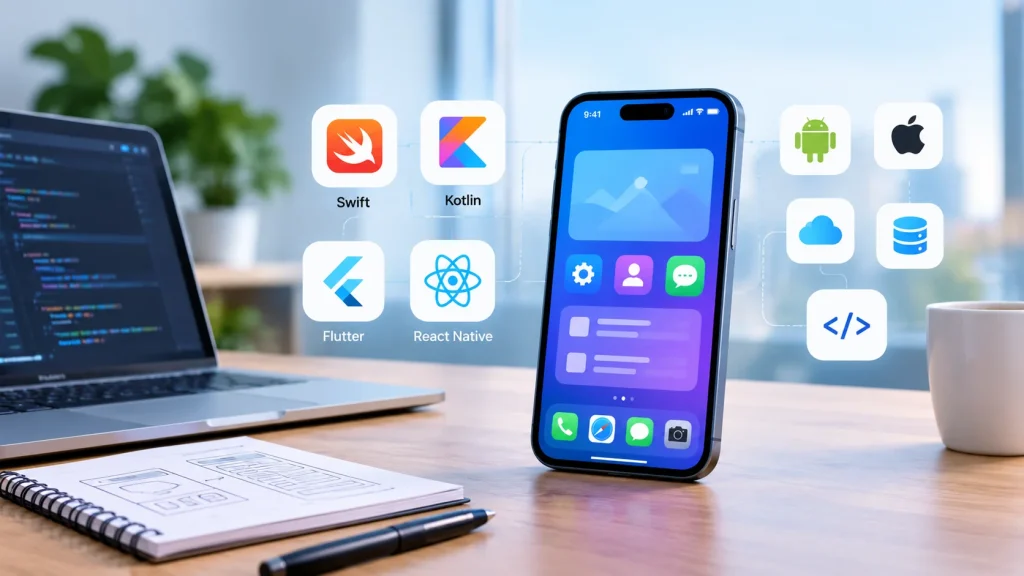
Mobile App Development Technologies: How to Choose the Right One for Your Business
Oct 06, 2026 10 min read
Mobile App Development Technologies: How to Choose the Right One for Your Business

A mobile app can support customer services, internal operations, payments, communication, or an entirely new digital product. The...

Read more
Top 10 Best AI Development Companies in the UK in 2027
Sep 30, 2026 13 min read
Top 10 Best AI Development Companies in the UK in 2027

Looking for the top AI development companies in the UK? You’re not short on options. The challenge is...

Read more
Website Development Cost in the UK: What Should Businesses Budget in 2026?
Sep 24, 2026 16 min read
Website Development Cost in the UK: What Should Businesses Budget in 2026?

How much should your business budget for website development in the UK?  If you’ve requested quotes recently, you’ve...

Read more

No videos found.

Client Testimonials

The Core team have now been working with Vrinsoft for two years and the combined teams now have a number of delivery milestones under their belts. Vrinsoft are big enough to have the strength and depth to deliver complex projects, but have retained their entrepreneurial traits and customer relationships, making them an ideal technology partner […]

Jonathan

CEO, Core

Vrinsoft has a team of well-grounded developers, and they helped us through the process. They focused on our requirements and fulfilled them in the best possible ways. It was a wholesome experience and we will surely partner with these experts in the future again.

natalie-cester

Natalie Cester

Co-Founder

Vrinsoft has a team of experts who prioritize the client’s request. The team was so supportive and they made sure that all our requirements were considered while developing the product. They tailored everything we wanted and we were happy with their smooth and well-grounded services.

robert-jonas

Robert Jonas

Chartered Certified Accountants

We are into textile printing and screen printing services, and we wanted a strong website that will help our customers. Vrinsoft has developed a wonderful website, which helped us to enhance our services and deliver the best to our customers

User

Debbie

Sales Administrator

Got questions? We’ve got answers

IP:216.73.217.10

We’d ❤️ to Hear from You

Requirements depend on the software, data handled, industry, and intended users. They may include UK GDPR, the Data Protection Act 2018, and the Data (Use and Access) Act 2025 for data protection. Financial applications may need to account for FCA/PRA rules and PCI DSS for card payments. Healthcare software may require NHS clinical safety standards DCB0129 and DCB0160, while NHS-facing digital health products may need to meet DTAC criteria. Accessibility requirements, cybersecurity controls, and sector-specific rules should also be assessed during planning.

Yes. Vrinsoft offers dedicated software developers for UK businesses requiring ongoing development support or additional technical expertise. Teams can include frontend and backend developers, software engineers, QA specialists, and integration experts. The engagement can be planned around required skills, project scope, communication needs, and existing team structures.

Yes. Vrinsoft can assess an existing application’s codebase, documentation, dependencies, integrations, and technical condition before planning the transition. Our software development services can support bug fixes, new features, system integration, modernisation, and ongoing maintenance, with the handover scope agreed before work begins.

Ownership depends on the development agreement and its intellectual property clauses. Businesses should clarify source code ownership, licensing, third-party components, documentation, and delivery obligations before development starts. A custom software development company should document these terms in the contract so both parties understand their rights and responsibilities.

The cost of bespoke software development in the UK depends on functionality, integrations, architecture, design, security, testing, and ongoing support requirements. A smaller business application may require considerably less work than a complex enterprise platform. A detailed discovery phase helps establish scope, milestones, resource requirements, and a realistic project estimate.